Skip to Content

18(2)

in education, 2012, 18(2)

Autumn 2012


Table of Contents


Editorial

An introduction to the Autumn 2012 issue.  

Articles

This paper reports on one aspect of a larger study to examine the relationship between preservice teachers’ self-reports of their levels of knowledge and confidence concerning many key areas of professional knowledge and skills.  Knowledge and confidence in working with parents were examined using information provided by current and recently graduated concurrent and consecutive bachelor of education students.  Results indicate that although knowledge remains consistent over the course of concurrent education, confidence does increase between Year 1 and 3, but then remains constant.  Recent graduates do not feel overly knowledgeable or confident in their ability to communicate with parents.  However, consecutive students reported significantly more knowledge and confidence compared to concurrent students.  Because communicating with parents is a key expectation of professional teachers, this finding is important.  The results of this research support the need for additional strategic instruction and practice to develop skills related to communicating with parents in teacher preparation programs.
Although teacher education programs across the country are currently under significant review and reform, little attention is paid to the importance of Indigenous principles that could inform or transform them. Attention to Indigenous principles such as those presented in this paper can, we believe, serve to decolonize teacher education, offering programs that enable greater success for a wider array of diverse students, both Aboriginal and non-Aboriginal, and address their needs and interests. The intent of this paper is to draw attention to the ways Indigenous principles offered by Lil’wat scholar Lorna Williams have influenced one teacher education program, and to share some of the ways that these principles have been enacted within the program. We offer our perspectives as narrative accounts of what we have done in our courses and in our teacher education program that reflect the principles explained in the paper. We do not feel we can express this perspective any different other than to recount shifts made and our observations as educators. These could be expressed as case studies but this would only be paying lip service to claiming a methodology that was not really followed. We offer this paper more as a sharing of narratives drawn to the indigenous principles. Authenticity comes from our common perceptions from different perspectives in the program.
Two action research projects of the Community-Based Master of Education program at the University of Regina are featured with particular attention given to a developmental progression that takes place through a series of action research cycles, involving a significant shift from a classroom-based to a community-based teaching practice. In taking an Indigenous perspective on community-based education, this study draws upon Jo-Ann Archibald’s (Q’um Q’um Xiiem) (2008) Indigenous Storywork: Educating the Heart, Mind, Body, and Spirit. As an Indigenous approach to life and learning, Archibald’s work offers an insightful perspective on community-based education that is of value to educators with an interest in community development and its potential for schools. In closing, the prospect of educational action research as part of a community-based teaching practice is considered.  
In this reflective study, six members of a Faculty of Education implemented or adapted research-informed assessment practices in their university Bachelor of Education teaching.  These practices included aligning university course outcomes to assessment, separating achievement on university course outcomes from achievement of non-academic outcomes, collaboratively creating achievement indicators for provincial curriculum outcomes, co-constructing criteria with university students for assignments, setting up opportunities with university students for peer feedback before an assignment is submitted for marking, and administering and marking a test according to research-suggested practices.  This article describes the implementation of these practices and analyzes the challenges and successes experienced as these teacher educators strove to model assessment practices that are expected of preservice teachers when they enter the profession.  The primary goal of implementation was to increase congruence between teaching and practice in terms of assessment. Keywords: assessment, preservice teacher learning, self-study    
In the new millennium, international interest has developed on the trouble of boys, both in and out of school, with a particular focus on boys’ deficiencies in literacy skills.  This interest has prompted research and action plans in Australia, Great Britain, the United States, and to a more regionalized or provincial capacity within Canada, such as in the Toronto District School Board and the province of Ontario.  However, in Canada, amidst a popular discourse that underscores the problems facing boys by focusing on literacy, many of the stark and sweeping trends regarding Canadian boys remain obscured.  This paper has four major components that are purposely provocative in order to interrogate many widely held assumptions.  Firstly, we provide the overall impetus for this paper, background caveats, and the concept of strategic essentialism.  Secondly, we introduce a synopsis of several countries’ initiatives to address nationally boys’ problems, and then the prevalent literacy movement seen in the representative province of Ontario, Canada.  Thirdly, we produce statistical indicators of school engagement and achievement for Canadian boys as compared to girls, and further patterns regarding their physical and mental health, as an overview of the state of Canadian boyhood.  Lastly, we offer several paths for further consideration in Canada, (a) recommending more complex desegregation of the data to understand with more precision which boys are struggling, using an analysis that goes beyond gender to encompass race, class, sexual orientation, disability, and geographical location; (b) offering as an example, an empirical study of adult role models in Canada, and the effects on boys; (c) suggesting a broader social understanding of gender, that is complicit with the boy code; and (d) encouraging movement towards addressing Canadian boys’ issues using the aforementioned trends and recommendations, with not only regional and provincial approaches, but also a national and holistic lens, too. Keywords: strategic essentialism, boys and literacy, boys and mental health, boys and schooling    
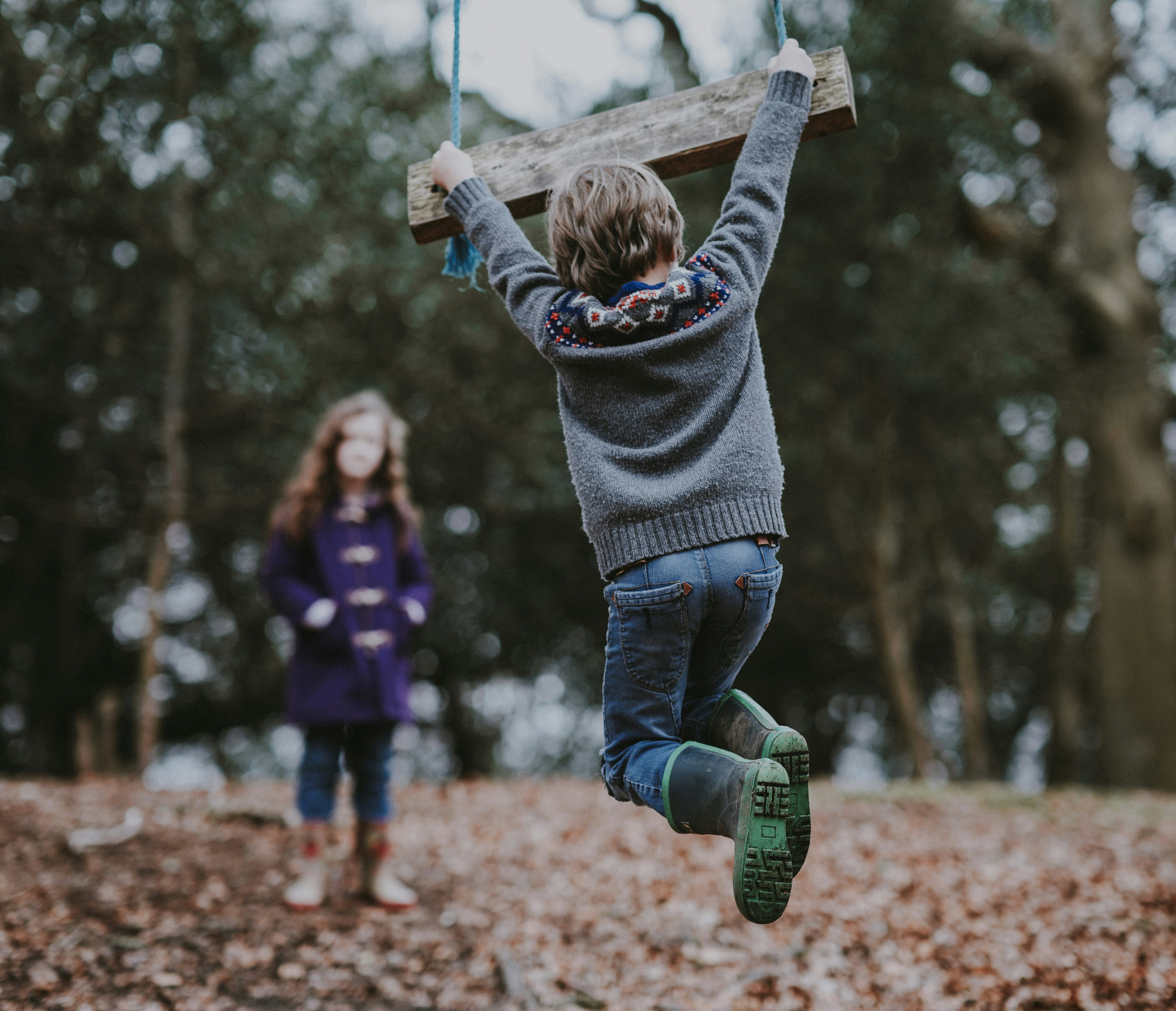
Children’s play experiences demonstrate many benefits for learning, cognitive development, and self-awareness. Evidence reveals that children require regular amounts of play. Despite this evidence, play has been rapidly disappearing from the home, the neighbourhood, and the school over the last two decades. Curriculum reformers present empirical data to suggest that safety, health and fitness, and behaviour considerations compel a structured approach to playtime from Kindergarten through to Year 6 of primary school. In this article, I argue that one can know from personal experience that authentic play experiences are valuable and one can also show through personal experience that play is vital for learning. These two approaches defend play as a valuable learning experience for curriculum development. Keywords: childhood, play, curriculum development, knowing, showing  

Book Review

A Review of Handing One Another Along: Literature and Social Reflection by Robert Coles Coles, R. (2010). Handing one another along: Literature and social reflection (273 pages). T. Hall & V. Kennedy ( Eds.). New York: Random House.